
While most Americans were cozy, snuggled up inside their beds, U.S. special forces made major moves on Venezuelan leader Nicholas Maduro.
The situation between the U.S.A. and Maduro started out as a capture of one man but led to an impact felt by millions. The U.S. entered Venezuelan airspace and bombed several parts of Caracas with the goal of taking the leader Nicholas Maduro. The most recent developments regarding Maduro occurred Jan. 3 which students remember vividly.
“At 2 a.m. here, 4 a.m. in Venezuela time, America came in and captured Maduro,” senior German Quero said. “My grandparents are living there right now and my mom studied in Caracas. Her Facebook was blowing up with the news.”
The impact of Maduro’s leadership was strong and his power was clear to those living there.
“I heard a lot of comments throughout my family of how Maduro was doing horrible things and affected how people lived,” senior Victoria Chourio said. “He was constantly messing up how we wanted the country to work.”
According to Visual Capitalist, the capture of Maduro and the U.S’s involvement in Venezuela is so crucial because of the oil reserves that Venezuela has — the world’s largest.
“Maduro and his group nationalized the oil industry,” Quero said. “They didn’t handle it well. That’s why the economy went all the way down.”
There is also a concern of U.S. intervention regarding the oil.
“With Trump’s presence, Venezuela’s supply of oil is going to go down,” Chourio said. “For right now it’s better, but in the long run, I don’t think it will be as good.”
According to Pew Research Center over 1 million Venezuelans have immigrated into the U.S. due to the horrible living conditions under Maduro and the inability to take care of their families.
“Everything they had there they lost,” Quero said. “For the working class and younger, they could no longer live their life there so they immigrated here to the U.S. That explains the large numbers.”
Maduro’s presence in the country was particularly disheartening for families living in Venezuela.
“Most Venezuelans don’t like the environment of what became of the country specifically when Maduro was there,” Chourio said. “That’s why my family came here, for better opportunities and to feel safer. People would be scared to go outside.”
Maduro’s tendency to silence the people was a front to democracy. In 2025, Venezuela ranked last in all countries on the WJP Rule of Law index, reflecting the lax constraints on government control and the presence of corruption.
“People couldn’t speak out about things because of his rule,” Quero said. “It felt like living as a citizen was impossible.”
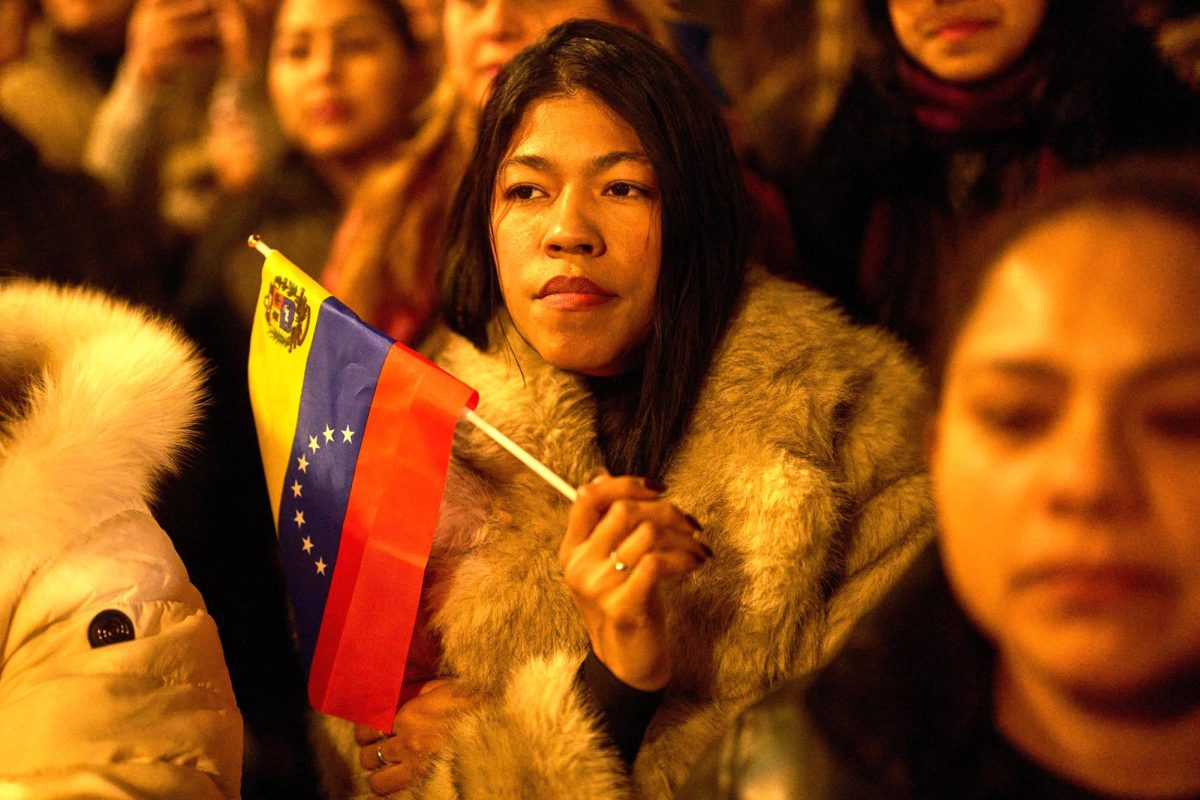
Due to the mass immigration numbers, Venezuelan culture has made its way to the U.S. in a strong way.
“In Katy there are a lot of Venezuelan traditions, stores, and restaurants because of the many people there,” Chourio said. “I just visited and it feels like a part of Venezuela moved to Katy. It’s really nice.”
One question that must be addressed is what’s next for the changing country.
“The issue with other countries in situations like these is that they don’t have replacements afterwards,” Quero said. “Venezuela has the real winners from the 2024 election that Maduro controlled. Maria Corina Mochado & Edmundo Gonzalez Urrutia — hopefully they can come in.”
For those that want to experience an updated Venezuela, there are severe advisories against movement there right now.
“I’m very excited for the new Venezuela,” Quero said. “Once travel restrictions are lower I’m definitely visiting all of my family.”